
When Clothes Stop Fitting: Untangling Body Image From Self-Worth
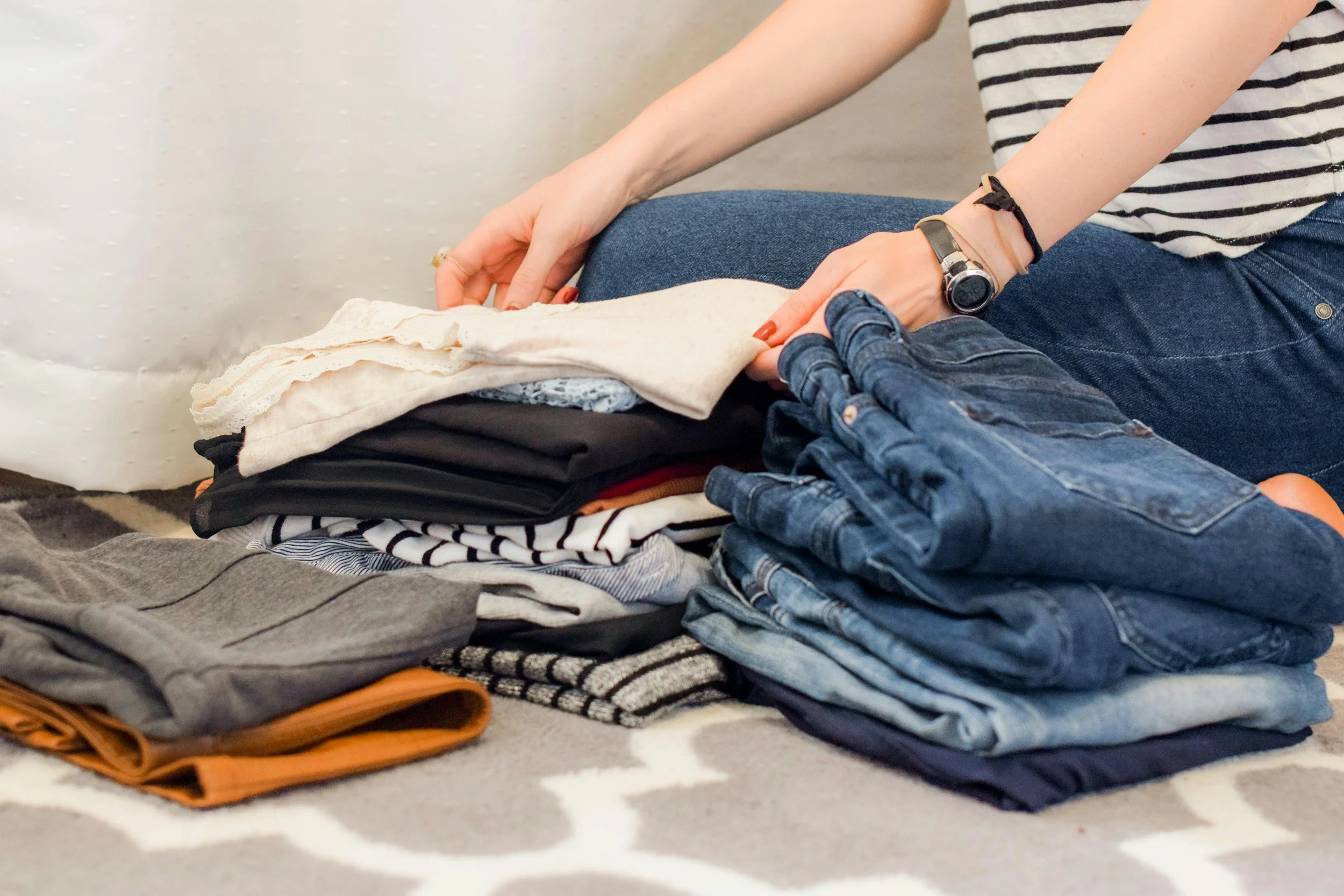
You go and pull the dress from your closet that you only wear once or twice a year for a special occasion, but the zipper won't close.
You're wanting to try the newest jean trend. You grab your usual size from the rack, and they don't fit.
The clothes you wear all the time are slowly starting to feel physically uncomfortable.
Moments like these can often trigger a wave of shame, panic, or self-criticism that seems out of proportion to a sewn piece of fabric. If this has happened to you, it's worth understanding why it hits so deeply and why it has very little to do with the clothes themselves.
Why Clothing Holds So Much Power
Clothing is never just clothing. It's an expression of who we are, what we like, and the culture we come from. It's also a basic need, one that can reflect socioeconomic status. For many people who went through school without uniforms, clothing was one of the earliest, clearest signals of whether we were socially "in" or "out." Clothing helps us belong and belonging is essential for survival.
So when clothes stop fitting, it can send a genuine stress signal to the brain. Because clothing is worn directly over our bodies, the brain naturally couples the two together. For many people, the stress of a piece of clothing not fitting quickly transfers into thoughts about the size or weight of their body; even when the actual cause might be something as ordinary as inconsistent sizing, fabric shrinkage, or simply how a body naturally changes over time.
The Messages We Absorbed Growing Up
There are countless opinions out there about what bodies "should" look like and often, those opinions started at home. We learn by watching and hearing our parents react to their own bodies, or to other people's bodies. We absorb rules about food and its impact on our bodies, some spoken directly, many never said out loud at all. We observe what those closest to us are wearing and follow suit (or maybe didn’t and then got critiqued).
We also learn from media which body types are treated as desirable and which aren't. We learn that certain stores only carry certain sizes and that sizing itself isn't standardized. None of this is neutral. It all quietly shapes the beliefs we carry about our own bodies, often long before we're old enough to question them.
How to Reclaim Self-Worth
Start by acknowledging the beliefs you hold that tie clothing to your worth. Many of us carry an unspoken equation that if my clothes fit, I'm okay; if they don't, something is wrong with me. Naming that belief is the first step to loosening its grip.
Work with a trained body image therapist to explore how these beliefs started and how to care for the younger parts of you that absorbed them. Negative body image beliefs are learned, which means they can be examined, understood, and gently rewritten. Understanding and caring for the younger you that learned them can help to create change for your present day adult self. For beliefs that feel especially stuck, or that connect back to a specific painful memory or experience, EMDR can be a powerful tool to help process and release them.
Refocus on what clothes are actually for. Strip away the size-and-worth narrative and clothing's real purpose comes back into view: comfort, warmth, cultural expression, practicality, even joy. A piece of clothing not fitting doesn't change any of that.
Reflect on who you are, unrelated to your body. Your humor, your values, your interests, your curiosity, the way you show up for the people you love. None of that lives in a zipper or a size tag. Reconnecting with these parts of your identity can help loosen body image's grip on your sense of self-worth.
You Are Not the Number on a Tag
If a moment with your clothes has ever sent you spiraling, please know you're not vain, dramatic, or alone. You're responding to a lifetime of messages that taught you to tie your worth to your body's size. That response can be understood and it can be rewritten.
If untangling body image from self-worth feels like more than you can navigate alone, body image therapy can help. Reach out to schedule a consultation.